What is Bisorb ?
The Bisorb® is a revolutionary mode of topical drug delivery in the management of CRS, enabling targeted, sustained release of corticosteroids directly to sinonasal mucosa with simultaneous stenting of the postsurgical sinus cavity.
Ethmoidal Placement
Maxillary Placement
Frontal Placement (Draf 3)
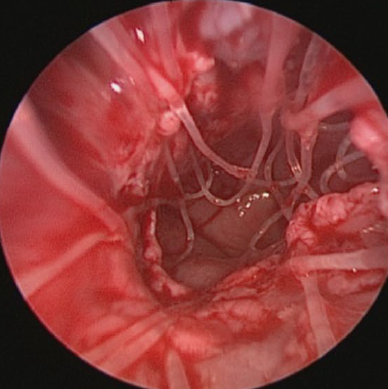
The middle of the stent can be filled with "finger sleeve"
Frontal recess Placement
Fixed mucosal flap
Clinical evidence-Clinical trial 50+
POST-OPERATIVE INTERVENTION
Conclusions: Bisorb® Reduced Inflammation, Polyp formation and Need for Additional Surgery .
improving surgical outcoms——ethmoid sinus
The Bisorb® implant is comprised of a biodegradable PLG polymer matrix coated with 652 μg of mometasone furoate(MF) in a spring-like fashion, which is gradually eluted over a 30-day period.
How It Works ?
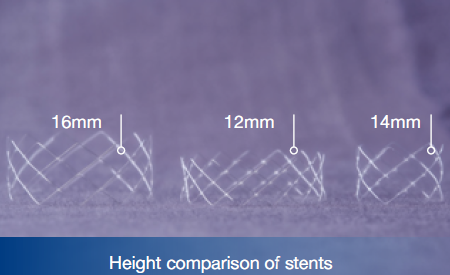
Bisorb® Drug-eluting Sinus Absorbable Stent System Specification
How It Works
How It Works
How It Works
How It Works
SEVERE ADHESIONS
INFLAMMATION POLYPOSIS
Bioabsorbable steroid-eluting sinus stents for patients with refractory frontal diseases undergoing a revision Draf 3 procedure: a case series .
Case 1
Conclusions: Bisorb® Drug-eluting sinus stents may decrease recurrence rates in revision cases where patients have extensive scarring or neo-osteogenesis of the operative field from prior Draf 2 or 3 procedures.
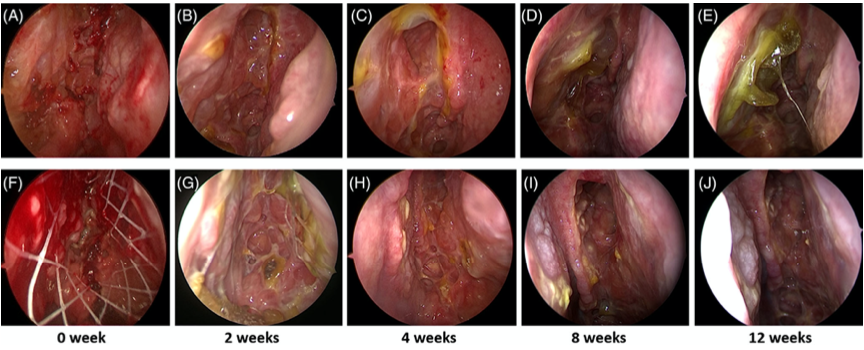
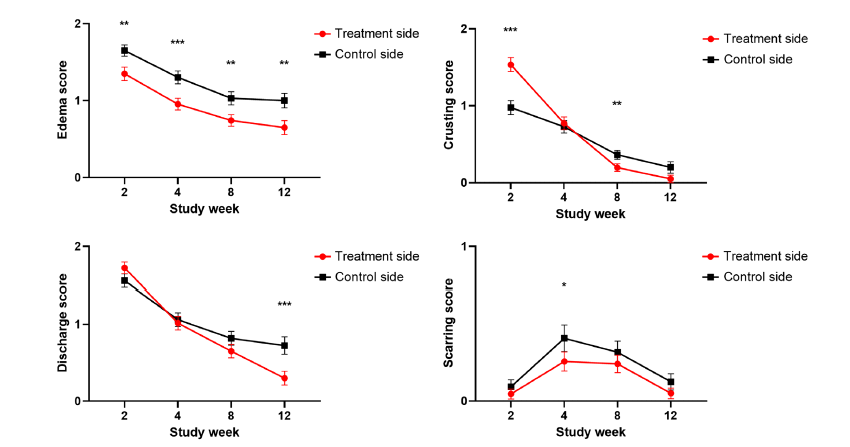
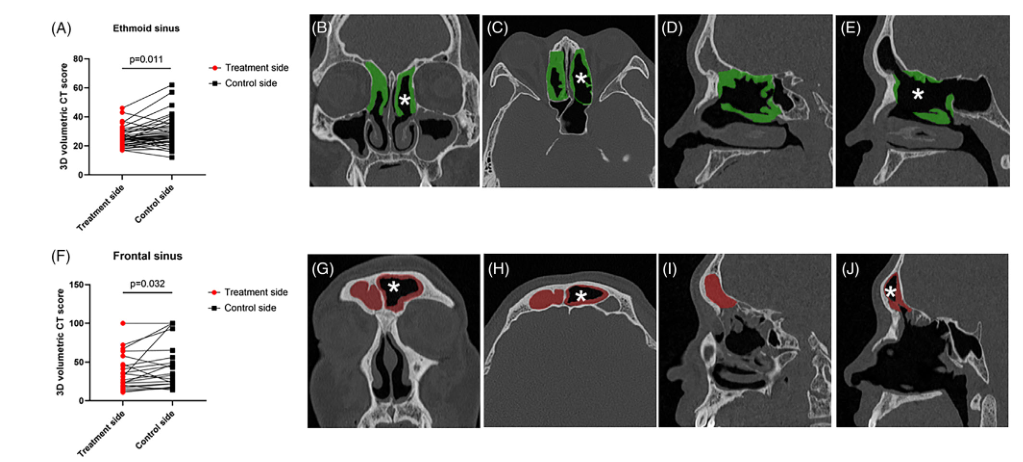
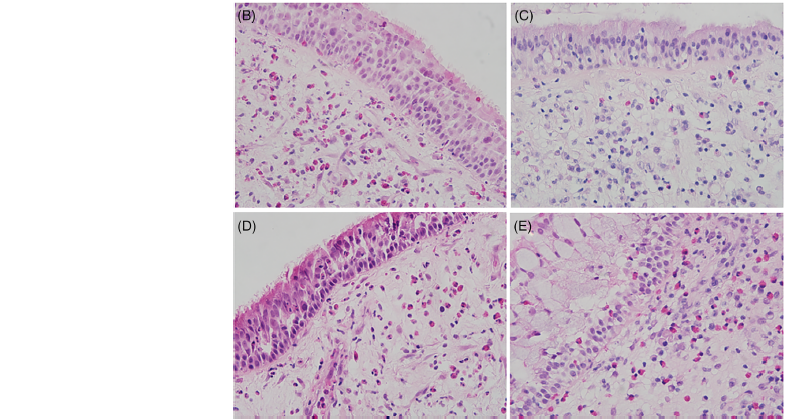
Conclusions: Bisorb® Drug-eluting sinus stents reduce postoperative sinus mucosal edema, and eosinophilic inflammation, with persistent effects after stent disintegration,and are a good supplementary postsurgical treatment in patients with ECRSwNP.
improving surgical outcoms——frontal sinus
improving surgical outcoms——ECRS
Comparison of type 2 inflammatory mediators between the stent group and control group. ESS, endoscopic sinus surgery; ns, no significance.*P < .05. ****P < .0001.
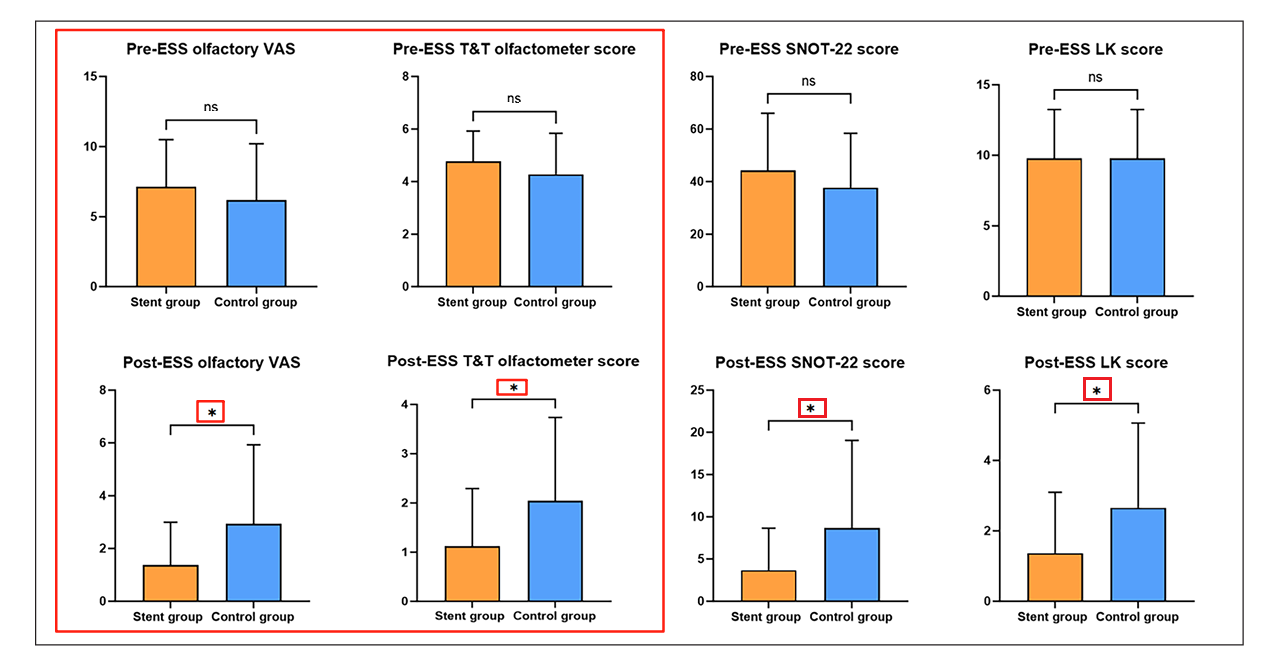
Conclusions: Bisorb® Drug-eluting sinus stent is an effective treatment for olfactory deficits in patients with CRSwNP and may be related to the stent’s more effective reduction of local type 2 inflammatory mediators in the nasal cavity.
improving surgical outcoms——CA
Choanal Placement
Anastomotic Placement (EN-DCR)
How It Works
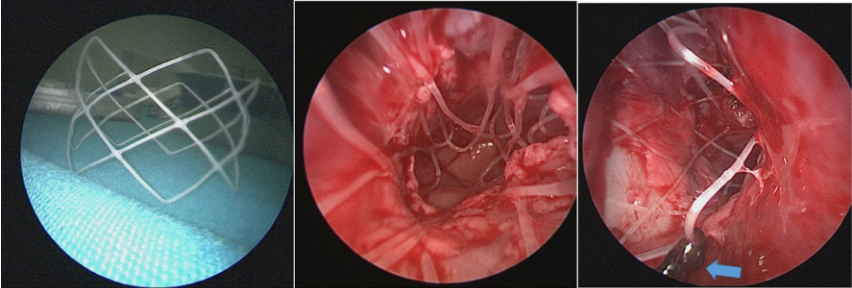
(a)The shape of Bisorb® steroid-eluting stents.
(b)Intraoperative placement of
bioabsorbable steroid-eluting stents during primary
repair of bilateral choanal
atresia on a neonates.
(c)
A silk suture placed on the stent.
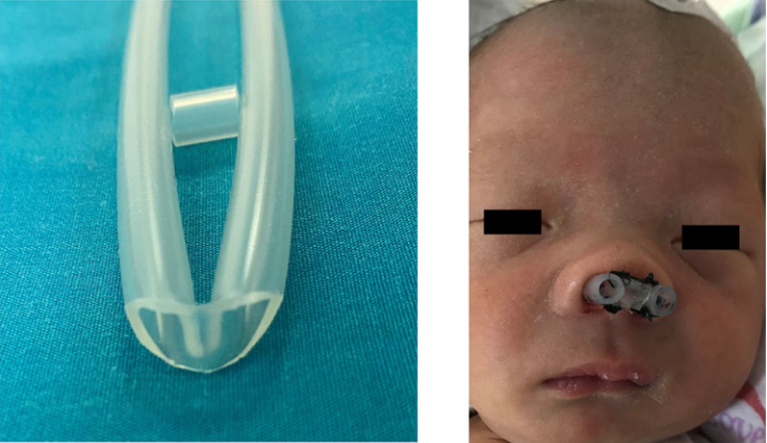
Customized silicone stents made by
silicon suction catheter and how it placed.
(d) The catheter was folded and a
posterior fenestration
was created, where dorsally a bridge was
left behind
which hinges around the vomer.
(e) A small connecting piece was
sutured between both
nasal openings in order to prevent the postoperative
displacement.
Conclusions: The endoscopic septonasal flap technique can effectively expose and expand the choanal bony structure for repair of congenital choanal atresia in neonates and infants. The combined use of this technique along with Bisorb® Drug-eluting sinus stents can help prevent the need for revision procedures and also against stent-related injuries.
improving surgical outcoms——EN-DCR
A prospective single-center &
single-arm trial
A total of 31 patients (33 eyes) were
included
FIGURE
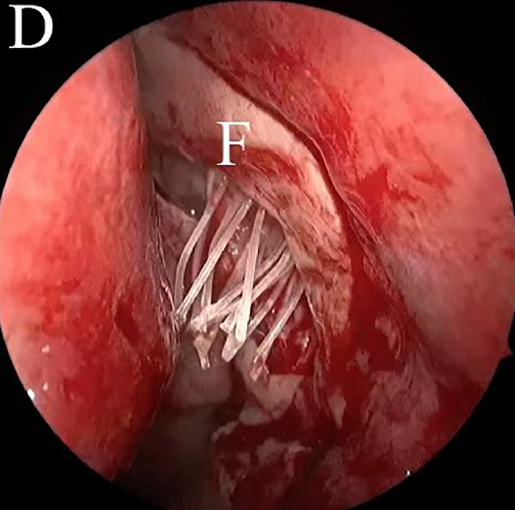
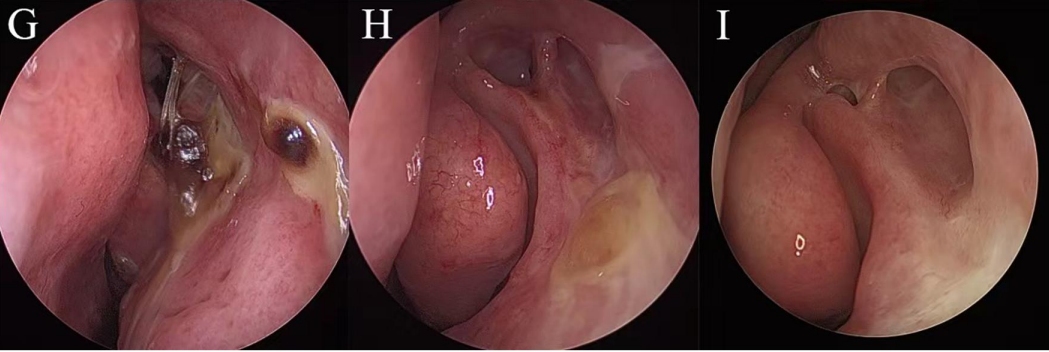
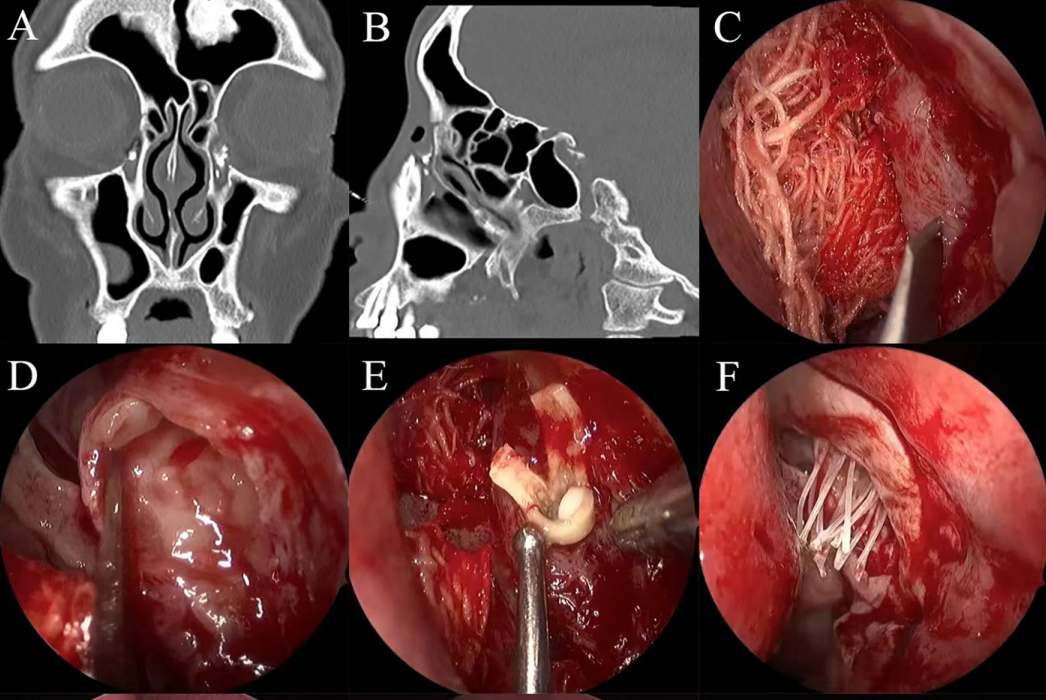
Representative case demonstraing the appication of a steroid-eluting stent in endoscopic dacrvocystorhinostomy (EN-DCR). (A.B) Coronal and sagital computed tomography (CT) demonstrating left lacrimal passage obstruction and a previously implanted siicone intubation that has remained in the lacrimal passage long-term. (C) The maxilary frontal process was driled to expose the lacrimal sac, (D) Edematous lacrimal sac mucosa .(E) Residual silicone tube identifed in the lacrimal sac. (F) A steroid-eluting stent was implanted. (G) Endoscopic view at 2 weeks post-EN-DCR showing the stent with minor crusting around the neo-ostium. (H) Endoscopic view at 4 weeks post-EN-DCR showing a patent lacrima sac lumen with the stent having been removed, (l) Endoscopic view at 12 months postoperatively showing a patent lacrimal sac lumen.
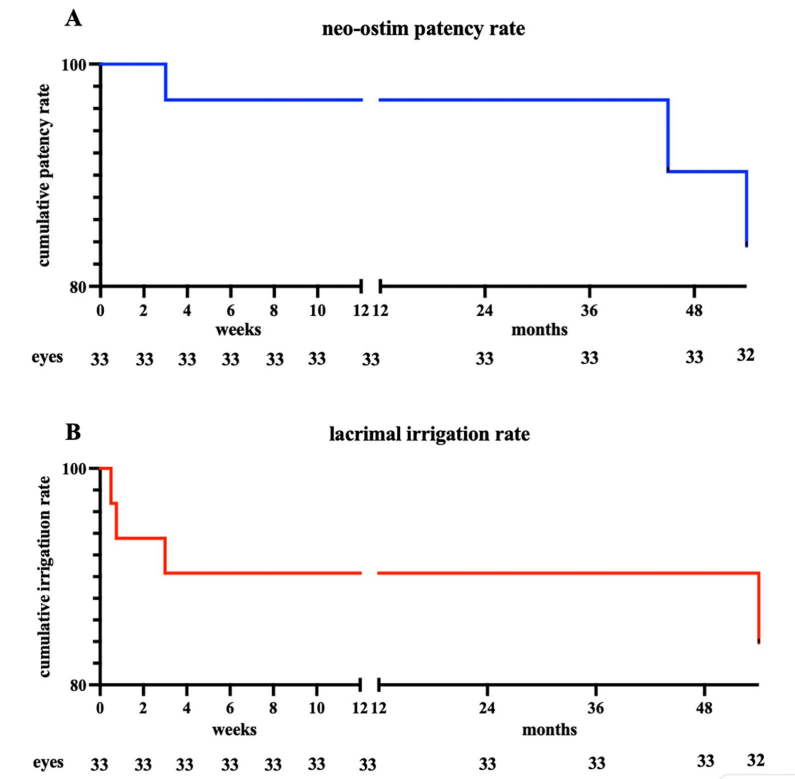
At 12, 45 and 54 months, the neo-ostial patency rates were 96.97% (95% confidence interval [CI] 80.37%– 99.57%), 93.94% (95% CI 77.88%–98.45%) and 90.70% (95% CI 73.84%–96.91%), with 3 eyes experiencing ostial occlusion over 54 months.
Lacrimal irrigation success rates matched patency rates at 12 and 45 months (96.97% and 93.94%, identical 95% CIs), declining to 84.22% (95% CI 66.12%–93.12%) at 54 months in 5 eyes with irrigation failure.
Serum cortisol concentrations stayed within normal range, with no stents-related adverse events documented postoperatively.
Conclusions: Implantation of steroid-eluting sinonasal stents during EN-DCR achieves favorable long-term safety and efficacy by preserving neo-ostial patency. Nevertheless, dedicated stents anatomically tailored to the neo-ostium of EN-DCR are required to further optimize surgical outcomes.
The European Position Paper on Rhinosinusitis and Nasal Polyps (EPOS 2020)
United States: International consensus statement on allergy and rhinology: rhinosinusitis 2021
Chinese guidelines for diagnosis and treatment of chronic rhinosinusitis(CPOS 2018 & CPOS 2024)
“Endoscopic sinus surgery (ESS) is only a component of CRS treatment. Surgery cannot completely remove or change the inflamed sinus mucosa. Continuous postoperative care and comprehensive drug therapy can promote the gradual recovery of sinus mucosal morphology and function. “
” If local edema or polyp regeneration occurs in the sinus mucosa(especially the frontal recess), it can be treated by local placement of glucocorticoid-containing gelatin sponge, local simultaneous washing of glucocorticoid-diluent, or placement of glucocorticoid-drug sustained-release stent in the sinus cavity.”
References
FIGURE 2 Typical endoscopic views of the bilateral nasal cavity of the control (A-E) and treatment sides (F-J) of same patient at weeks 0.2.4.8. and 12.
Model Specification Table
Model
Diameter (mm)
Height (mm)
Conveyor angles
Frontal sinus
Sphenoid sinus
Ethmoid sinus
maxillary sinus
Draf 3
SDES2514-1
25
14
10°
√
√
SDES2514-2
25
14
70°
√
SDES2514-3
25
14
110°
√
SDES2516-1
25
16
10°
√
√
SDES2516-2
25
16
70°
√
SDES2516-3
25
16
110°
√
SDES4012-1
40
12
10°
√
√
√
SDES4016-1
40
16
10°
√
√
√
SDES4212-1
42
12
10°
√
√
SDES4212-2
42
12
70°
√
√
√
SDES4214-1
42
14
10°
√
√
SDES4216-1
42
16
10°
√
√
Table 1. Patient Demographic and Clinical Characteristics
Table 1. Summary of the demographic and clinical characteristics of patients who underwent a Draf 3 with steroid eluting sinus stent.
TABLE I-4 Grade A/B evidence-based recommendations for medical management of CRS
Intervention
Grade
Benefit
Harm
Cost
Benefit-Harm Assessment
Policy Level
CRSwNP: Corticosteroid Eluting Implants
A
Reduction in ethmoid obstruction, polyp grade, decreased need for revision ESS, reduced nasal obstruction scores
No findings of increased risk of elevated intraocular pressure or cataracts
Moderate to High
Benefits appear to outweigh harm
Option: Corticosteroid-eluting implants can be considered as an option in a previously operated ethmoid cavity with recurrent nasal polyps
Table 1.6.1. Treatment evidence and recommendations for adults with chronic rhinosinusitis.
Therapy
Level of evidence
GRADE recommendation
Corticosteroid-eluting implants
1a
The placement of corticosteroid-eluting sinus implants in the ethmoid of patients with recurrent polyposis after sinus surgery has a significant but small (0.3 on a 0-3 scale) impact on nasal obstruction but significantly reduces the need for surgery and reduces nasal polyp score. Based on the moderate to high quality of the evidence the steering group considered the use of corticosteroid-eluting sinus implants in the ethmoid an option.
Male, 37-year-old, recurrent frontal rhinosinusitis; Surgery history: 1 FESS, 2 Draf 3 procedures and 1 balloon dilation; Preoperative CT scans (A-C) Postoperative endoscopic view of the frontal sinus, 8 months postoperatively (D) The arrow marks the narrowed frontal neo-ostium. the patient presented with a headache. SP: septum.
A prospective , multicenter ,randomized , intrapatient-controlled trial Ninety-eight patients were enrolled Eosinophilic chronic rhinosinusitis with nasal polyps—— refractory CRS Treatment side—Bisorb® stent side Control side—non-stent side Comparison of the tissue eosinophilia volumetric, nasal obstruction, and total nasal symptom scores , stent side was lower than the control side
FIGURE 3 Endoscopic scores of patients' bilateral nasal cavity at weeks 2, 4, 8, and 12 postoperatively. (A) Lund-Kennedy (LK) score. (B) Polyp score. (C) Edema score. (D) Crusting score. (E) Discharge score. (F) Scarring score. Bars and error bars represent means and standard errors. Wilcoxon test was performed, with *p < 0.05, **p < 0.01, and ***p < 0.001.
FIGURE 4 Comparison of the computed tomography (CT) findings between bilateral nasal cavities at week 8 postoperatively.Three-dimensional (3D) volumetric score of the ethmoid (A) and frontal (F) sinuses. Volumetric segmentation of the ethmoid sinus in the coronal (B), axial (C), and sagittal (D, E) views. Volumetric segmentation of the frontal sinus in the coronal (G), axial (H), and sagittal (I, J) views. White asterisk indicates the treatment side. The control side is unmarked.
FIGURE 5 Comparison of histopathologic differences between bilateral nasal cavities at week 4 postoperatively. (A) Comparison of the eosinophil count of the ethmoid sinus mucosa between bilateral nasal cavities. (B-E) Histologic evaluation of the bilateral ethmoid sinus mucosa in the same patient (hematoxylin and eosin stain; ×400 magnification). (B, C) Representative images of treatment side tissue at presurgery and 4 weeks postsurgery, respectively. (D, E) Representative images of control side tissue at presurgery and 4 weeks postsurgery,respectively.
Enrollment
Allocation
Follow-up
Analysis
Patients with CRSwNP-associated olfactory dysfunction (n=60)
Excluded (n=0)
Allocated to two groups based on choices of patients (n=60)
Allocated to stent group (n=30):
Perform endoscopic sinus surgery (n=30)
Placed the steroid-eluting stents (n=30)
Allocated to control group (n=30):
Perform endoscopic sinus surgery (n=30)
Not placed the steroid-eluting stents (n=30)
Lost to follow-up (n=0)
Withdraw consents (n=0)
Lost to follow-up (n=1)
Withdraw consents (n=0)
Completed the study and data analysis
(n=30)
Completed the study and data analysis
(n=29)
(a)
(b)
(c)
(d)
(e)
A retrospective clinical trial N=37 neonates and infants of the congenital choanal atresia 22 patients —silicone stents group 15 patients —Bisorb® stents group Comparison of the average operative duration and the hospital length of stay were shorter in Bisorb® stents group Need secondary general anesthesia to remove the silicone stents
Pre-ESS and post-ESS olfactory Visual Analogue Scale (VAS), T&T olfactometer score, SNOT-22 scores, and Lund-Kennedy scores between the stent group and control group. ns, no significance; ESS, endoscopic sinus surgery.*p < .05.
improving surgical outcoms——Olfactory Dysfunction
Why is the 'steroid-eluting stent' recommended with the high level of evidence for CRS ?
Steroid-eluting stents have been shown to significantly reduce the rate of reoperation and lower postoperative nasal polyp scores, and their application is strongly recommended by the ICAR-RS 2021, EPOS 2020, as well as CPOS 2018 and 2024 clinical guidelines.
【1】
【2】
【3-4】
【5】
【6】
【7】
【8】
【9】
【10】
【1】Orlandi,et al.International consensus statement on allergy and rhinology: rhinosinusitis 2021. Int Forum Allergy Rhinol.2021;11:213‒739.
【2】W.J.Fokkens,V.J.Lund,et al.European Position Paper on Rhinosinusitis and Nasal Polyps 2020. Rhinology Supplement 29: 1- 464, 2020.
【3】Society of Otorhinolaryngology Head and Neck Surgery, Chinese Medical Association. Chinese guidelines for diagnosis and treatment of chronic rhinosinusitis (2018).Chin J Otorhinolaryngol Head Neck Surg,2019;54(2):81-100.
【4】Society of Otorhinolaryngology Head and Neck Surgery, Chinese Medical Association. Chinese guidelines for diagnosis and treatment of chronic rhinosinusitis (2024).Chin J Otorhinolaryngol Head Neck Surg,2024;60(3):221-249.
【5】Zhenxiao Huang , Bing Zhou, Dehui Wang,Hongrui Zang,Huankang Zhang,Huan Wang, Shenqing Wang,Lei Cheng,Jinrang Li,Wenying Wu,Huifang Zhou,and Huili Wu. Comparison of Bioabsorbable Steroid-Eluting Sinus Stents Versus Nasopore After Endoscopic Sinus Surgery: A Multicenter, Randomized,Controlled,Single-Blinded Clinical Trial. Ear, Nose & Throat J. 2022 May;101(4):260-267.
【6】Zhenxiao Huang, Qian Huang, Bing Zhou, Jingying Ma, Mingjie Wang , Yi Dong. Bioabsorbable steroid-eluting sinus stents for patients with refractory frontal diseases undergoing a revision Draf 3 procedure: a case series. Acta Otolaryngol. 2019 Jul;139(7):636-642.
【7】Chengshuo Wang ,Longgang Yu,Xiaohan Chu,Kuiji Wang,Jian Li, Yinyan Lai,Cuida Meng, Weiping Wen,Dongdong Zhu,Yuan Zhang,Luo Zhang.Short-term postoperative efficacy 11 of steroid-eluting stents for eosinophilic chronic rhinosinusitis with nasal polyps: A randomized clinical trial. Int Forum Allergy Rhinol .2023;13(5):899-909.
【8】Zhang Z, Zuo Q, Du Y, Jiang H, Wang J, Ma F, Zhang Y. Topical Therapies for Management of Olfactory Dysfunction in Chronic Rhinosinusitis with Nasal Polyps:Steroid-Eluting Stents. Ear Nose Throat J. 2023 Dec;280(12):5417-5431.
【9】Wang PP,Tang LX, Zhang J, Yang XJ, Zhang W,Han Y, Xiao X, Ni X, Ge WT. Combination of the endoscopic septonasal flap technique and bioabsorbable steroideluting stents for repair of congenital choanal atresia in neonates and infants:a retrospective study. J of Otolaryngol Head & Neck Surg .2021;50(1):51 .
【10】Xian M, Meng Y, Wang M, Zhou Y, Wang K, Song X, Dong Y, Zhao G, Jie Y and Wang C. Long-term efficacy and safety of steroid-eluting sinonasal stents in endoscopic dacryocystorhinostomy: a prospective, single-arm study. Front. Surg. 2026;13:1916619. doi: 10.3389/fsurg.2026.1916619.
【11】Hao Zheng,,Shao-peng Huang, Xiao-yan Wang, Qing-hua Liu,Yong Chen and Qing Ye. Novel triple pedicled mucoperiosteal flaps in reconstruction of neo-ostium after Draf Ⅲ frontal sinusotomy for refractory frontal sinusitis. Int Forum Allergy Rhinol . 2022 Oct;12(10):1321-1324.
【12】Ao HUANG,TaoLI,Min-shanLI,Zhen-xiao HUANG,De-hui WANG,Lei CHENG,Bing ZHOU.Heng WANG , Zheng LIU. Association of Comorbid Asthma and the Efficacy of Bioabsorbable Steroid-eluting Sinus Stents Implanted After Endoscopic Sinus Surgery in Patients with Chronic Rhinosinusitis with Nasal Polyps. Curr Med Sci.2023 Oct;43(5):1005-1012.
【13】Xin LUO,Xue-kun HUANG, Ya-na ZHANG, Qin-tai YANG. Editorial Commentary: Association of Comorbid Asthma and the Efficacy of Bioabsorbable Steroid-eluting Sinus Stents Implanted after Endoscopic Sinus Surgery in Patients with Chronic Rhinosinusitis with Nasal Polyps. Curr MedSci. 2023 Dec;43(6):1258-1259.
【14】Li Zheng,Zhe Chen, Jing Jin, Yuqin Deng,Lisheng Fu,Wei Zhang,Rong Xiang,Bei Guo,Zezhang Tao,Yu Xu.The efficacy of steroideluting stents on the local inflammation of chronic rhinosinusitis with nasal polyposis after endoscopic sinus surgery: a multicenter prospective longitudinal study.Eur Arch Otorhinolaryngol.2023 Dec;280(12):5417-5431.
【15】Wen JY,Wang ZZ,Zhen FX,Zhen HT.Navigation-assisted endoscopic U-flap technique and steroid-eluting stent for choanal atresia repair. Int J Pediatr Otorhinolaryngol. 2025 Jan 3;189:112217. doi: 10.1016/j.ijporl.2025.112217.
【16】Haoran Huang,Lijun Xu ,Yinyan Lai,Haocheng Tang. Effective Treatment for Choanal Atresia Using Laser and Steroid Stents: A Case Report. OTO Open. 2025 Feb 13;9(1):e70082. doi: 10.1002/oto2.70082.
【17】Wan Yufeng, Liu Longsheng, Xu Panpan,Gao Junkang. Efficacy annalysis of use of absorbable sinus drug stents in functional endoscopic sinus surgery.J Clin Otorhinolaryngol Head Neck Surg(China).2020;34(5):417-420.
【18】Shi Xiaoqiong, Tang Haihong, Zheng Hongliang, Chen Zhengming, Xiao Lingyue, Huang Yiqun.Studies on efficacy of a bioabsorbable steroid-eluting sinus stent in the frontal sinus opening of chronic rhinosinusitis with nasal polyps.Chin J Otorhinolaryngol Head Neck Surg,2021;56(8):824-829.
【19】LOU Fan,MING Cheng,MA Jing,ZENG Wenjuan,WANG Meilan,ZU Jinyan.Effectof drug-eluting stent in the treatment of congenital choanal atresia.Chin J Otorhinolaryngol Skull 12 Base Surg.2021;27(2):146-150.
【20】Hu Haolei , Li Yi , Yue Wei , Xing Peimei , Zhang Pengzhen.The efficacy of anastomotic drug stent applied in endoscopic dacryocystorhinostomy.Chin J Ocul Traum Occupat Eye Dis.2021;43(5):367-371.
【21】Xu Hongming, Fan Wenyan, Pu Shilei,Li Xiaoyan. Clinical data analysis of 36 cases of antrochoanal polyp in Children.Journal of Otolaryngology and Ophthalmology of Shandong University.2023;37(6):159-163.
【22】Yao Zhongxuan, Shao Yudi, Zhang Yanling,Chen Bai,Xiao Chaoqiu, Wang Hao,Zhao Zeqi,Li Wei.Postoperative placement of steroid eluting stents for the treatment of external auditory canal stenosis: two cases report.CHINESE MEDICAL CASE REPOSITORY 2023,5:e03076.
【23】Chen Bai, Li Wei,Yao Zhongxuan, Wang Hao, Zhao Zeqi, Xiao Chaoqiu.Analysis of the therapeutic effect of drug stent-assisted endoscopic tympanoplasty type Ⅰ in the treatment of chronic suppurative otitis media.Modern Medical Journal.43、2024;52(9):1391-1398.
【24】Zhou Bing, Wang Min.The postoperative follow‑ up and comprehensive management for type‑ 2 dominant chronic rhinosinusitis.Chin J Otorhinolaryngol Head Neck Surg,2026;61(5):596-602.
【25】ZHANG Yanni, XIA Cui, HU Xincheng, ZHU Kang, REN Xiaoyong, SUN Bin.Clinical application of mucosal flap technique combined with a corticosteroid eluting stents in bony nasal stenosi.J Clin Otorhinolaryngol Head Neck Surg(China).2026;40(8):740-744.
【26-52】......
A prospective ,randomized ,multicenter , controlled, single-blinded clinical trial
N=181(CRS)
Treatment side—received a Bisorb® drug-eluting sinus absorbable stent in one ethmoid sinus cavity. Control side—a Nasopore package.
Follow-up 90 days, polyp formation, severe adhesion and the need for postoperative surgical intervention was significantly lower on the stents sides

 Frontal recess Placement
Fixed mucosal flap
 Clinical evidence-Clinical trial 50+
POST-OPERATIVE
 Bisorb® Drug-eluting Sinus Absorbable Stent System Specification
How It Works
 How It Works
 How It Works


 How It Works


 SEVERE ADHESIONS

 Conclusions: Bisorb® Drug-eluting sinus stents may decrease recurrence rates in revision cases where patients have extensive scarring or neo-osteogenesis of the operative field from prior Draf 2 or 3 procedures.


 Conclusions: Bisorb® Drug-eluting sinus stents reduce postoperative sinus mucosal edema, and eosinophilic inflammation, with persistent effects after stent disintegration,and are a good supplementary postsurgical treatment in patients with ECRSwNP.

 improving surgical outcoms——frontal sinus


 Comparison of type 2 inflammatory mediators between the stent group and control group. ESS, endoscopic sinus surgery; ns, no significance.*P < .05. ****P < .0001.
Conclusions: Bisorb® Drug-eluting sinus stent is an effective treatment for olfactory deficits in patients with CRSwNP and may be related to the stent’s more effective reduction of local type 2 inflammatory mediators in the nasal cavity.
 Choanal Placement
Anastomotic Placement (EN-DCR)
How It Works
 Conclusions: Implantation of steroid-eluting sinonasal stents during EN-DCR achieves favorable long-term safety and efficacy by preserving neo-ostial patency. Nevertheless, dedicated stents anatomically tailored to the neo-ostium of EN-DCR are required to further optimize surgical outcomes.
 The European Position Paper on Rhinosinusitis and Nasal Polyps (EPOS 2020)
 Chinese guidelines for diagnosis and treatment of chronic rhinosinusitis(CPOS 2018 & CPOS 2024)
 Male, 37-year-old, recurrent frontal rhinosinusitis;
 (a)
(b)
(c)
(d)
(e)
A retrospective clinical trial

 enquiry@yipurunbio.com commercial@yipurunbio.com
Room 2206, No. 396, Lishizhen Road, Pudong New Area, Shanghai
